Local manufacturing capabilities in Poughkeepsie, NYOur shop · Videos · About · Contact · Call 845-402-6318

Home / Products / Ceramic / Harsh industrial duty

Ceramic UF & MF · silicon carbide + alumina

When polymer membranes aren't an option.

Hot water, pH outside 2–11, strong oxidants, solvents, free oil, abrasive solids. These are the streams that wreck PVDF, PES and PAN membranes, and the projects many suppliers walk away from. Silicon carbide and alumina ceramic membranes can be backwashed, cleaned hard, and kept running.

Send us the stream. We will tell you SiC, alumina, or that it's still a polymer job.

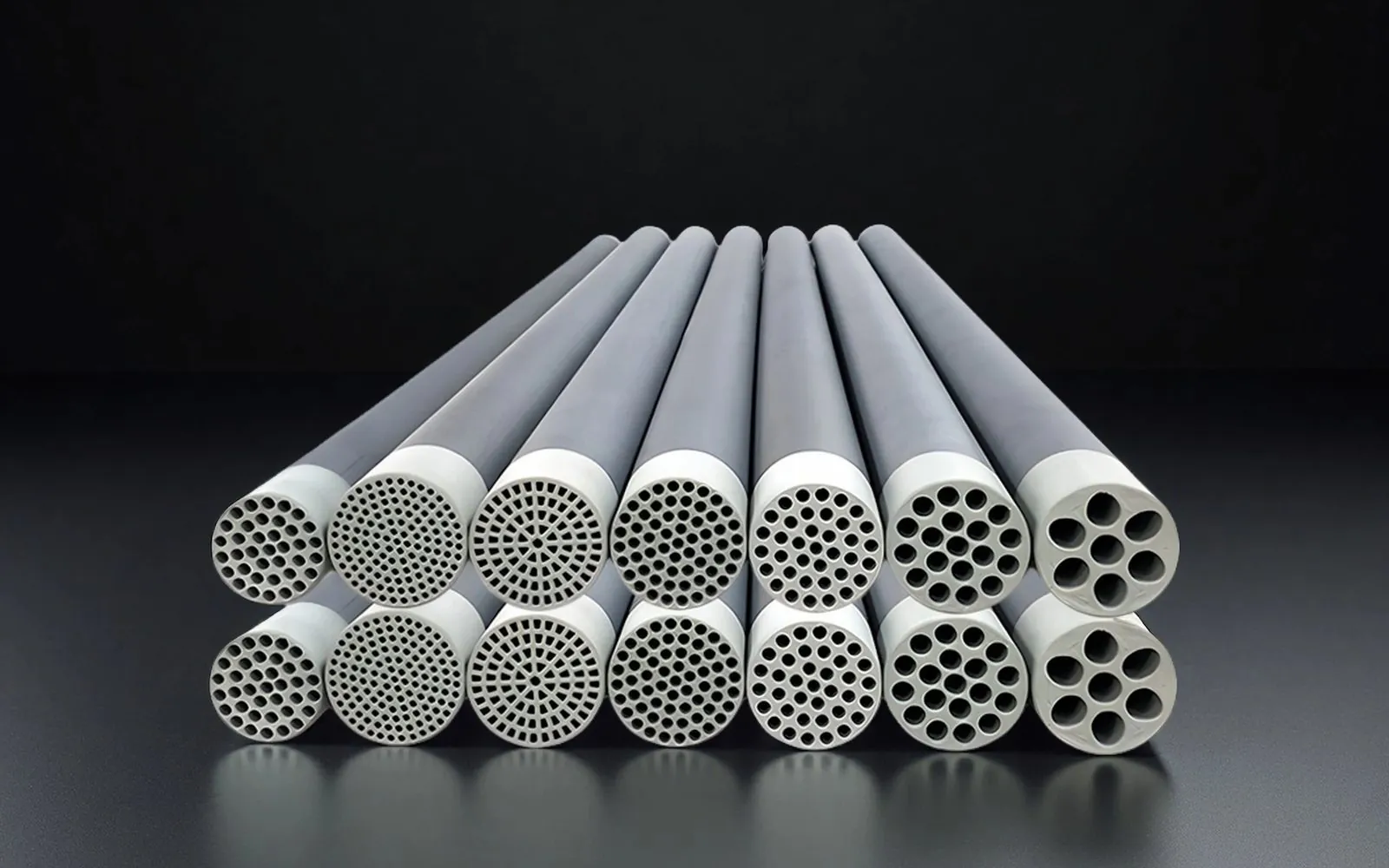
Silicon carbide multi-channel tubular ceramic membrane elements

Where polymer runs out

Published limits of typical polymer UF membranes.

These limits are widely documented in industry literature for water-treatment UF modules. Specialty polymer grades can stretch some of them, but most installed PVDF, PES and PAN modules sit inside these lines.

LimitTypical polymer UF (PVDF / PES / PAN)What that means on a hard stream
TemperaturePVDF modules: 34–104 °F (1–40 °C), some to 113 °F (45 °C). PAN: 113–131 °F (45–55 °C).Hot rinse, condensate, hot oily emulsions and process water have to be cooled first, so the heat is thrown away.
pH, operatingPVDF 2–11; PAN 2–10 or 3–10.Acid leach, pickling rinse, spent caustic and brine streams fall outside the window.
Strong causticPVDF degrades in strong alkali (pH ≥ 11–12). It discolors and turns brittle.Hot caustic cleaning shortens membrane life, and high-pH process streams cause fiber breaks.
OxidantsPVDF: cumulative hypochlorite limits of about 500,000–1,500,000 ppm·h. PAN: under 0.1 ppm free chlorine while running.Every aggressive clean uses up membrane life, and ozone or chlorine upstream is restricted.
SolventsPES is not resistant to ketones, DMF, DMSO, ethyl acetate or phenol. PVDF is attacked by hot ketones, DMF, NMP and some amines.Pharma, fine-chemical and solvent-bearing wash streams can swell or dissolve the membrane.
Oil & greaseSubmerged polymer UF: feed O&G limits of about 100–300 mg/L.Produced water, metalworking coolant, laundry and food-oil streams foul the membrane and don't fully recover.

These limits are widely documented in industry literature. They are not Zyramic test results.

The projects others walk away from

Six problems that send engineers to ceramic.

“Our membranes keep breaking.”

Fiber breaks and delamination happen when the feed is abrasive or full of solids, or when the membrane has been cleaned hard too many times. Ceramic elements are rigid. SiC flat sheets can be spaced from 0.31 to 1.42 in (8 to 36 mm) apart for high-solids feeds.

“We replace membranes every year or two.”

Chemical attack and cumulative chlorine exposure shorten polymer life. Ceramic takes strong acid, strong alkali and oxidant cleaning without that wear clock.

“Flux won't come back after cleaning.”

Oil and sticky organics cause irreversible fouling on polymer membranes. Hydrophilic SiC sheds oil, and full backwash plus CEB and CIP restores flux.

“We have to cool the stream first.”

Polymer UF typically tops out at 104–131 °F (40–55 °C). 300 °F (about 150 °C) is not a problem for most ceramic and stainless steel builds, so heat can be recovered rather than thrown away.

“The pH is off the chart.”

Acid leach, pickling, brine and spent caustic all fall outside polymer windows. The SiC material class handles pH 0–14. Housings and seals are matched to the stream and quoted per project.

“There's solvent in the water.”

Solvents dissolve or swell polymer membranes. SiC is solvent- and oxidant-stable. Where the stream is a solvent rather than water, ask about ceramic pervaporation for dehydration.

Application classes

Where ceramic earns its place.

These are typical streams where silicon carbide and alumina membranes are already running worldwide. No single result carries over to your stream, so we size against your feed analysis.

Produced & frac water

Free and emulsified oil, high TDS and variable solids. SiC is hydrophilic and backwashable for oil removal ahead of reuse or disposal.

Hot oily emulsions

Edible-oil and food-processing effluent at high temperature. Recover the oil and the heat instead of cooling first. Food and beverage plants: ceramic membranes for food and beverage.

Industrial laundry

Fibers, oil emulsions and microplastics in one stream. Ceramic MF/UF handles the mix after a 2 mm (0.08 in) screen.

Metalworking & coolant

Cutting fluids, wash water and alkaline cleaners. Recover the bath and cut the haul-off.

Acid & caustic streams

Acidic solid–liquid separation, pickling rinse, spent caustic and CIP caustic recovery.

Brine & chlor-alkali

Brine refining and brine-side MBR in chemical plants, where salt and chemistry rule out polymer.

Mine water

Abrasive fines, metals and low pH. Backwash and acid cleaning keep the elements in service.

Battery & advanced materials

Electrode-material washing, nano-powder washes and silica sol concentration. These are tight separations where product recovery matters.

Pulp, paper & fiber process water

Hot, fibrous, high-COD process water that fouls polymer membranes fast.

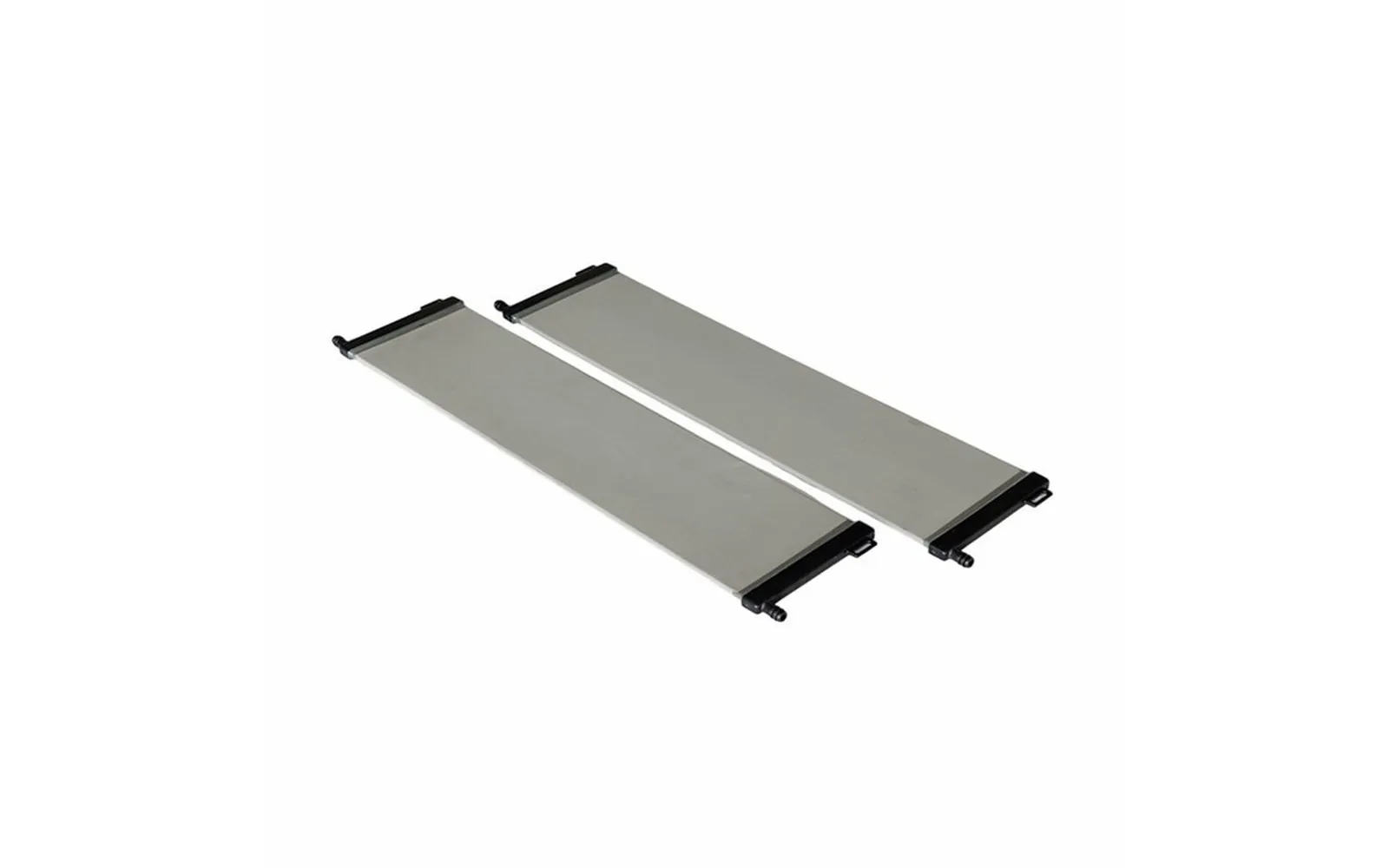
Silicon carbide flat-sheet ceramic membranes

Silicon carbide: for the hardest feeds

  • Hydrophilic recrystallized SiC. Tolerates oil, solvents and oxidants. pH 0–14 material class.
  • Mostly MF and coarse UF. Flux is typically 2–4× alumina at a similar pore size (material-class comparison).
  • Standard flat-sheet module: 29.4 × 28.1 × 6.3 in (746 × 715 × 160 mm), 42 sheets, 81 ft² (7.5 m²), 100 nm, 99 lb (44.8 kg) dry. Up to 10 modules per tower (807 ft² / 75 m²).
  • Real backwash up to 17 psi (1.2 bar), with CEB maintenance and CIP recovery.
  • Standard flat-sheet module housing: 41–113 °F (5–45 °C). Hot duty goes to tubular in stainless steel.
  • Ceramic flux depends on the application. As a general range, expect about 6–29 GFD (10–50 LMH) for non-pressurized (submerged) systems, and up to 100 GFD (170 LMH) for pressurized systems.
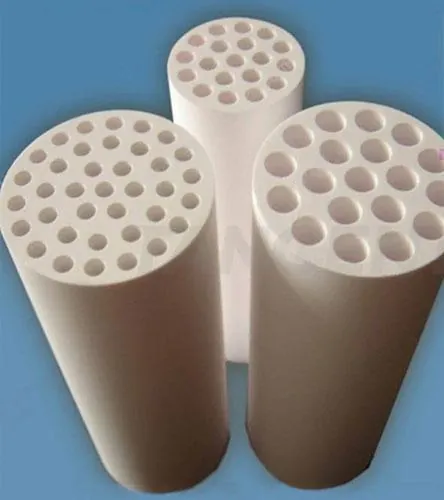
Alumina multi-channel tubular ceramic elements

Alumina: the workhorse

  • Sintered Al₂O₃, flat sheet or multi-channel tube. Lower cost than SiC.
  • Wider pore range, from tight UF down to near-NF on select elements.
  • Pressurized cross-flow. The tubular class is typically to 150 psi (1.0 MPa). 300 °F (about 150 °C) is not a problem for most ceramic and stainless steel builds. Quoted per stream.
  • Best for fine separations, product recovery, food and beverage, and reuse. Choose SiC for the oiliest streams.

Honest selection

When polymer is still the right call.

Ceramic costs more up front. If your stream is cool, near-neutral, low in oil and free of solvents, a polymer MBR or UF membrane is usually the better buy, and we make those too (Swing, Palisade, Scrub UF). Ceramic pays back when it is the only membrane that survives, or when longer life and less downtime outweigh the extra capital.

What to send

Feed first.

  • Flow, average and peak
  • Temperature (°F), pH range
  • Oil & grease, TSS, and any solvents or oxidants
  • The cut-off or permeate quality you need
  • Current membrane and what is going wrong

Lab or pilot testing on a sample is available before you commit.

Warranty against defects in materials and workmanship. For industrial applications, membrane life depends on the service duty, so we run a pilot test to establish expected system life.

Quick quote · 1 minute

Send us the stream.

Only your name and email are required. We reply from tom@zyramic.com, usually within one business day. Or call 845-402-6318.

Call 845-402-6318

Built and backed in the USA.

Ceramic elements come from certified sources, and the quotation documents their origin. Zyramic supplies the modules, and frames and skids are assembled in our Poughkeepsie, NY shop.

We presently have a manufacturing facility in Poughkeepsie, New York, and the ability to ship from Europe and Asia.

On a federally funded job? Tell us your domestic-content requirements, including Build America, Buy America (BABA), and we'll review what we can document.

Zyramic, Inc.
14 Tucker Dr, Suite 4
Poughkeepsie, NY 12603
845-402-6318 · tom@zyramic.com

Ceramic data sheet (PDF) · Tubular class datasheet (PDF)
Call 845-402-6318Get a quote