
Common causes
- Back pressure on the permeate side, from backwashing a membrane not designed for it or from siphoning
- Weak or narrow edge seals and welds that fatigue as sheets flex
- Chemical attack from cleaning at concentrations or temperatures above the limits
- Abrasion from grit, and mechanical damage during handling
- Age: repeated flexing over many years
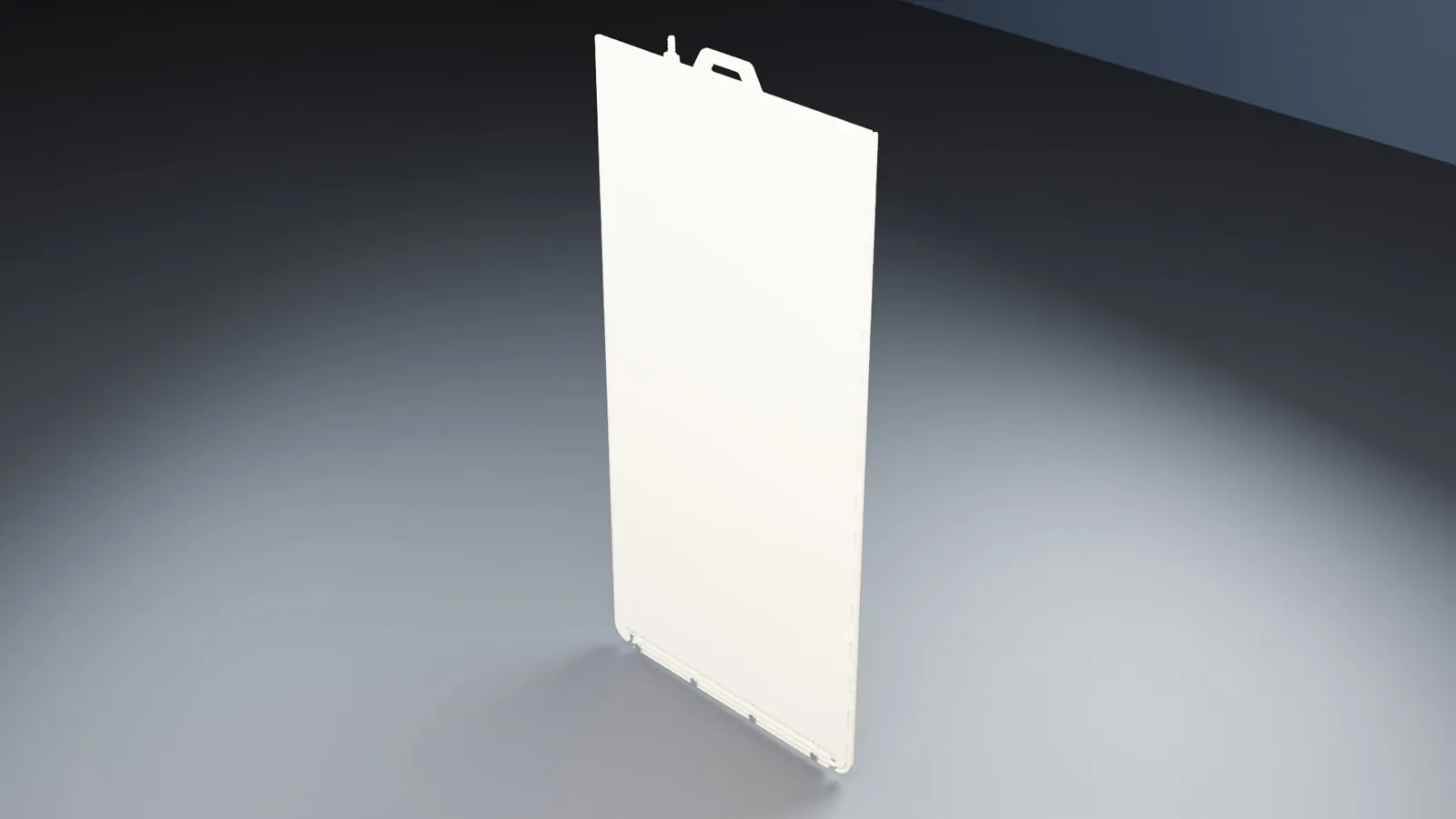
Hollow fiber, typical flat sheet and Zyramic cartridges
How the three approaches generally compare in service:
| Feature | Hollow fiber | Typical flat sheet | Zyramic cartridge (Swing) |
|---|---|---|---|
| Replacement | Whole bundle or module | Full panels or cassettes | Replace a cartridge quickly: swap one small cartridge in minutes without pulling the whole module |
| Owner maintenance | Bundle repair or replacement often needs specialist help | Panels or cassettes usually lifted as a unit | Surface servicing: sheets stay sealed in their small, cost-effective cartridge, so you swap the whole cartridge quickly, in minutes, in-house with basic tools and little downtime |
| Wear and tear | Fibers can break at the potting | Large sheets flex in service | Small sheets flex less, for less wear and tear |
| Edge seals | Potted fiber ends | Varies by design | Strong wide membrane welds, designed to resist delamination |
| Membrane | Thin fibers | Varies | Thick, about 250 microns including support, for robust service |
| Ragging | Hair can wrap fiber bundles | Open channels | Open channels between small sheets |
| Inspection | Bundle examined closely | Panel lifted to inspect | A lifted cartridge shows its condition at a glance |
| Custom sizing | Fixed module sizes | Often fixed sizes | Cartridge and module sizes tailored to your tanks in many cases |
Performance depends on pretreatment, design flux and operation.
Warning signs
Watch for rising permeate turbidity or TSS, bubbles in the permeate line, a sudden drop in TMP at constant flux, or visible blisters on lifted plates. Integrity checks during routine inspections can catch failing sheets before they affect permits.
How Zyramic designs against it
Zyramic membranes use strong wide membrane welds that are designed to resist delamination, and a thick membrane of about 250 microns intended to be robust in service. Palisade welds PES membrane to solid polypropylene plates. Neither Swing nor Palisade is routinely backwashed; cleaning is by relaxation and reverse-flow chemical cleaning within limits. No membrane is immune, and life still depends on pretreatment and cleaning practice. When existing plates delaminate, our replacement membranes are made to fit many existing cassettes.
Worked sizing example
Take a 92,460 gpd (350 m³/day) plant replacing delaminated plates:
| Item | US | Metric | Note |
|---|---|---|---|
| Average flow | 92,460 gpd | 350 m³/day | about 64 gpm (14,583 L/h) |
| Design flux (gross) | 8.8 gfd | 15 LMH | Zyramic design guidance |
| Derate for relaxation and cleaning | ~20% | ~20% | |
| Net flux | ~7.1 gfd | ~12 LMH | |
| Membrane area needed | ~13,081 ft² | ~1,215 m² | average flow ÷ net flux |
| Swing-8 cartridges | ~98 | ~98 | 135 ft² (12.5 m²) each |
| Peak factor | ~2.0 | ~2.0 | |
| Peak flow | ~184,920 gpd | ~700 m³/day | extra area, short-term higher flux, or equalization |
This is an illustration only; a real design also checks temperature, MLSS, redundancy and the cleaning schedule.
Tips for a smooth project
- Look for the root cause before increasing cleaning strength
- Use temperature-corrected permeability when judging membranes
- Check screens for bypasses after storms
- Plan replacements ahead of permit deadlines
Next step
Membrane issues are easiest to resolve early. Send your trend data, cleaning records and a few photos, and we will give you our read on whether to focus on pretreatment, biology, operation or the membranes themselves, and a sensible next step, whether that is a change in procedure, a partial replacement or interim capacity.
Sizing considerations
To give a useful recommendation we usually need:
- Permeate turbidity history
- Cleaning chemistry, concentration and temperature
- Any backwash or back-pressure events
- Plate dimensions and port style
- Number of failed plates
Most relevant product: Palisade MBR. See also replacement membranes, rentals and how to choose.
Why engineers look at Zyramic flat-sheet modules
| Item | Details |
|---|---|
| Smaller sheets, less wear and tear | each sheet flexes less in service, and a damaged unit affects less area. |
| Strong wide membrane welds | designed to resist delamination over the membrane's life. |
| Thick, robust membrane | about 250 microns including support. |
| Assembled in Poughkeepsie, NY | of domestic and imported components. In our Poughkeepsie shop we cut and weld membrane sheets to plates, build module frames and assemble complete modules. For funded projects, tell us your domestic-content requirements and we'll review what we can document. |
| Buy, rent or replace | new modules, rentals and pilots for US projects, and replacement membranes that fit many existing cassettes. |
Performance and life depend on pretreatment, design flux and operation; flux figures are Zyramic design guidance, sized to each project.
Frequently asked questions
Can delaminated plates be repaired?
Generally not reliably in the field. Replacement is the usual fix.
How well do your plates resist delamination?
Our strong wide membrane welds and thick membrane are designed to resist delamination, and our warranty terms apply.
Will your plates fit my existing cassette?
Many cassettes can be fitted. Send plate size, port style and quantity.
How fast can you supply?
Lead time depends on size and quantity; ask with your quote request.
Can cleaning chemicals cause delamination?
Yes, cleaning above recommended concentration or temperature can weaken membranes and seals over time. Follow the published limits.
How do I test for integrity?
Permeate turbidity monitoring, bubble tests on lifted modules and visual inspection are common methods.